


The Role of Outdoor Advertising in Local Elections in Indonesia
Sunday, 1 Dec 2024

PT Lestari Dev Solusindo
Aldeoz Building Lt. 6, Jl. Wr. Jati Barat No.39, RT.2/RW.4, Kalibata, Pancoran, Jakarta Selatan, DKI Jakarta, 12740.
+6281389455717 - contact@lestariads.com
www.lestariads.com


As Indonesia experiences rapid urbanization and economic growth, the advertising landscape is evolving in response to changing consumer behaviors and media consumption habits. Businesses are constantly seeking innovative ways to reach audiences more effectively, beyond the traditional confines of television, print, or static billboards. Among the most dynamic and increasingly popular mediums is transit advertising a form of out-of-home (OOH) advertising that leverages public and private modes of transportation to deliver brand messages to large, mobile audiences.
Transit advertising has proven to be especially effective in Indonesia, where millions of people rely daily on public transportation such as commuter trains, MRT systems, buses, and ride-hailing services. By placing advertisements in and around these transport modes, brands can engage audiences in high-traffic environments where attention is naturally focused such as on platforms, inside trains, or during long commutes through traffic-congested areas.
This advertising format offers unmatched versatility, geographical reach, and cost efficiency. Whether targeting office workers commuting on the MRT, travelers passing through airports, or everyday consumers using online ride-hailing services, transit media delivers a strong presence in moments when people are more receptive to external stimuli.
The Indonesian market features a wide range of transit advertising opportunities across both public infrastructure and private mobility platforms. Here are the most prominent categories:
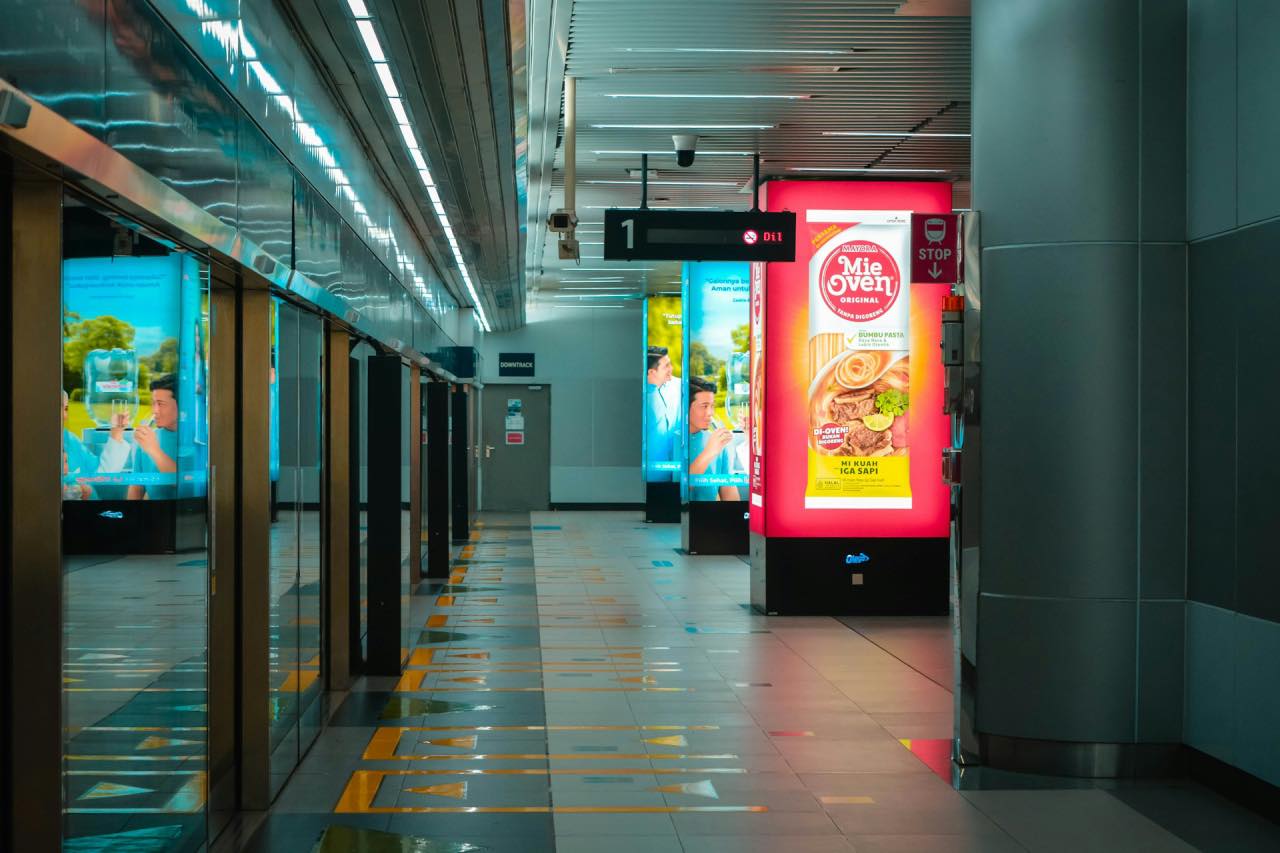
1. MRT (Mass Rapid Transit) Advertising
Jakarta's MRT system has become a hub for urban mobility, transporting thousands of passengers daily. Advertisers can leverage:
2. Commuter Train (KRL Jabodetabek) Advertising
With expansive coverage across the Greater Jakarta region, commuter trains serve as a strategic advertising platform:
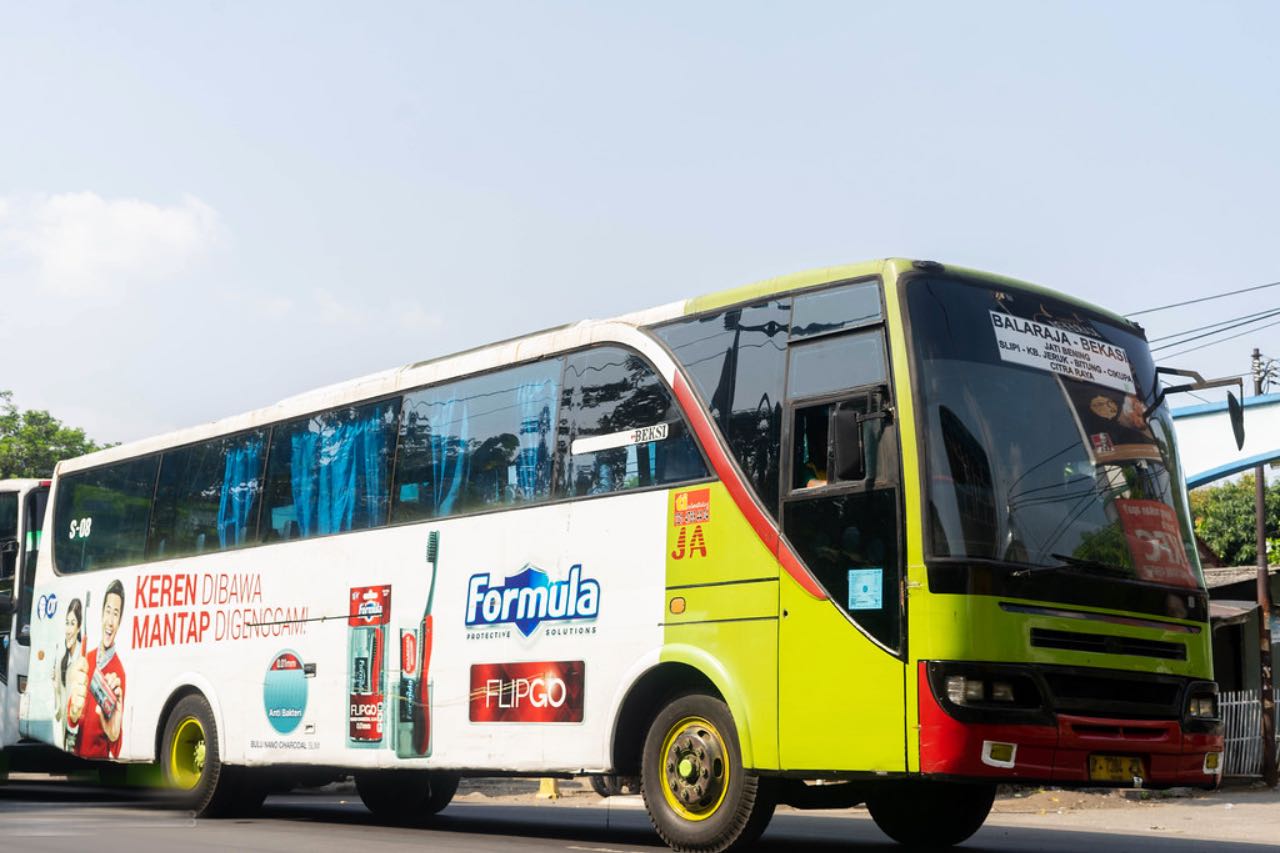
3. Bus Rapid Transit (TransJakarta) and City Bus Advertising
BRT systems are widely used in urban centers and provide significant exposure:
4. Airport Advertising
Indonesia’s airports, such as Soekarno-Hatta (Jakarta), Ngurah Rai (Bali), and Juanda (Surabaya), are key points for high-income travelers and business executives:
5. Mobile Billboards
These are branded vehicles that travel strategic routes, providing moving visibility:
6. Online Ride-Hailing Platforms (Gojek, Grab, Maxim)
Indonesia’s booming ride-hailing sector opens new advertising opportunities:
Transit advertising is more than just media on the move, it’s a smart, strategic way to capture the attention of a highly mobile, urban audience. Below are the reasons why brands across industries are investing in transit media:
1. Wide Audience Reach
Transit systems in major Indonesian cities serve millions of passengers daily. Advertising on these platforms ensures your message is seen by a broad cross-section of the population across different age groups and income levels.
2. High Engagement in a Captive Environment
Commuters typically spend extended periods on public transport or waiting at stations. This dwell time makes them more likely to notice and engage with ads, especially when creatively executed.
3. Cost-Effective Exposure
Compared to other forms of media, transit ads offer excellent return on investment (ROI). The cost per impression is significantly lower, and the visual impact is substantial.
4. Geographic and Demographic Targeting
Transit ads can be deployed based on specific routes, regions, or commuter profiles. For instance, targeting routes frequented by office workers, university students, or tourists allows for hyper-targeted messaging.
5. Creative Flexibility and High Visibility
Transit media formats allow for bold, large-scale creative executions from full vehicle wraps to interactive station installations. These eye-catching visuals generate buzz and social media traction.
6. Always Active and Non-Skippable
Unlike digital ads that can be blocked or skipped, transit ads are ever-present and unavoidable, offering persistent brand presence in high-traffic areas.
Transit advertising is increasingly viewed not just as a complementary medium, but as a central component of integrated marketing strategies. It supports awareness-building, reinforces brand recall, and helps drive offline-to-online conversion when paired with digital elements like QR codes or hashtags.
Whether you're a local startup seeking to build visibility or an international brand looking to expand in Southeast Asia’s largest economy, transit advertising in Indonesia offers a unique blend of scale, affordability, and impact.
Our team of experts specializes in crafting end-to-end transit advertising strategies tailored to your business goals. From creative development and media planning to execution and performance tracking, we offer comprehensive solutions to help your brand move with your audience.

Sunday, 1 Dec 2024
Saturday, 10 Jun 2023
Wednesday, 11 Jun 2025
Saturday, 9 Nov 2024

Thursday, 28 Nov 2024

Lestari Ads Agency - PT Lestari Dev Solusindo
Lestari Ads is a leading out-of-home media company with the largest network in Indonesia. We believe the world is a canvas. Every advertisement is an opportunity to inspire, engage, and transform public spaces. We continuously push boundaries in Out-Of-Home (OOH) advertising, changing the way brands interact with audiences beyond the digital screen, bringing stories to life where people live, move, and connect.
The most trusted OOH advertising agency in Indonesia
Experience the top of visibility with Indonesia's leading out-of-home (OOH) advertising agency. We specialize in turning the urban landscape into a dynamic canvas for your brand, crafting compelling narratives that capture the imagination of millions. Our mastery over strategic placements and innovative formats ensures your message not only reaches, but resonates with a diverse and expansive audience. With a proven track record of delivering high-impact campaigns across Indonesia's bustling cities and beyond, we redefine what's possible in OOH advertising.
Find the best quality billboard advertising space with variety of size and dimension
out-of-home advertising, digital billboards, traditional billboards, transit advertising, street furniture advertising, outdoor signage, digital ooh, led billboards, static billboards, large format advertising, advertising displays, ooh media, advertising billboards, outdoor digital screens, urban advertising, roadside billboards, digital signage, retail advertising, poster advertising, mobile billboard advertising, digital transit ads, interactive ooh, airport advertising, mall advertising, cinema advertising, sports venue advertising, digital outdoor advertising, public transportation ads, taxi advertising, bus shelter ads, pedestrian advertising, advertising kiosks, outdoor media solutions, billboard marketing, ooh advertising strategies, ooh media planning, digital billboard solutions, smart billboard advertising, contextual ooh ads, geotargeted ooh ads, location-based ooh, smart outdoor ads, programmatic ooh, data-driven ooh, brand awareness billboards, large-scale ooh campaigns, outdoor advertising effectiveness, billboard design, high-traffic billboard locations, hyperlocal ooh, street-level ooh, public transit advertising, ooh campaign management, outdoor digital displays, media buyers ooh, roadside digital ads, metro station advertising, shopping center ads, ooh advertising trends, outdoor media buying, bus wrap advertising, illuminated billboards, building wrap advertising, branded outdoor advertising, billboard networks, freeway advertising, expressway billboards, train station advertising, out-of-home advertising campaigns, event-based ooh ads, ooh media buying strategies, proximity-based ooh, national ooh campaigns, city-wide ooh advertising, large-scale outdoor campaigns, integrated ooh solutions, ooh digital networks, smart city advertising, mobile billboard solutions, dynamic outdoor ads, highway billboard advertising, ooh media optimization, digital out-of-home screens, high-impact ooh ads, retail digital signage, interactive billboard advertising, regional ooh advertising, local outdoor advertising, consumer engagement ooh, brand visibility outdoor ads, targeted billboard advertising, digital advertising screens, urban billboard advertising, weather-triggered ooh ads, motion sensor billboards, flexible ooh solutions, sustainable outdoor advertising, renewable energy billboards, solar-powered billboards, ooh for small businesses, outdoor brand activations.
Frequently Ask Questions
About Us


