

Innovative OOH Advertising Trends Shaping 2025
Monday, 27 Jan 2025

PT Lestari Dev Solusindo
Aldeoz Building Lt. 6, Jl. Wr. Jati Barat No.39, RT.2/RW.4, Kalibata, Pancoran, Jakarta Selatan, DKI Jakarta, 12740.
+6281389455717 - contact@lestariads.com
www.lestariads.com

Jakarta is one of the most dynamic metropolitan areas in Southeast Asia with extremely high levels of daily mobility. With a metropolitan population exceeding 30 million people, daily travel is a fundamental part of urban life. Millions of residents commute every day between residential districts, business centers, shopping areas, educational institutions, and entertainment hubs.
This constant movement of people creates a major opportunity for brands to connect with audiences through outdoor media. One of the most effective formats in this environment is transit advertising.
Transit advertising refers to advertising placements within public transportation systems. This includes bus branding, interior transit media, station advertising, and other communication formats that exist within the transportation ecosystem.
In Jakarta, the public transportation network plays a major role in the daily movement of people. The city’s transit infrastructure connects key districts and serves a wide variety of commuters throughout the day.
This article explores how consumer mobility in Jakarta creates powerful opportunities for brands and explains why transit advertising is one of the most effective communication strategies in the city.
As the economic center of Indonesia, Jakarta experiences a very high volume of daily travel. Every morning millions of commuters travel from surrounding metropolitan areas such as Bekasi, Tangerang, and Depok toward the city center.
This movement is not limited to office hours. Travel activity continues throughout the day due to education, shopping, leisure activities, tourism, and government services.
From a marketing perspective this creates what can be described as a moving audience. Consumers are not confined to a single location but travel through multiple urban corridors and transportation hubs.
Transit advertising allows brands to communicate with audiences throughout these journeys.
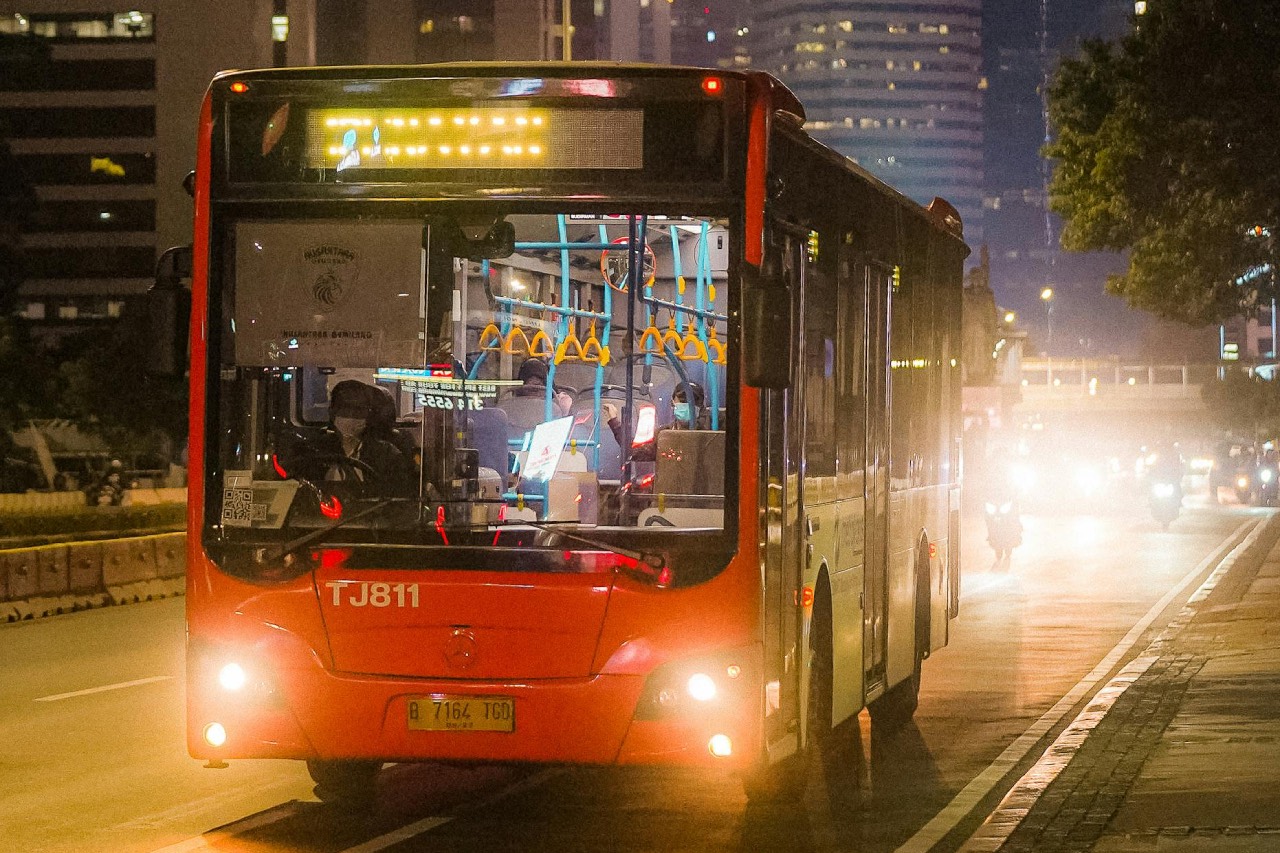
Public transportation plays a critical role in Jakarta’s urban mobility. The Transjakarta bus rapid transit system is one of the largest BRT networks in the world, connecting multiple districts across the city.
Every day the system serves hundreds of thousands and often more than a million passengers. These passengers represent a diverse demographic mix including office workers, students, tourists, and everyday urban commuters.
Because the network travels through major commercial districts, government areas, shopping zones, and business centers, transit vehicles become highly visible communication platforms.
Advertising placed on transit vehicles reaches not only passengers but also millions of road users across the city.
One of the biggest advantages of transit advertising is its high exposure level. Unlike static billboards that remain in a fixed location, transit vehicles move continuously through different parts of the city.
Each journey carries the brand message through high traffic districts, creating repeated exposure among multiple audience groups.
Passengers inside the vehicle may also view the advertisement during their trip, which increases the duration of message interaction. This longer exposure period can significantly improve brand recall.
Transit systems naturally attract a wide variety of users. In Jakarta the public transport network is used by professionals, students, tourists, and people from many different income groups.
This diversity makes transit advertising a powerful channel for brands that want to reach a broad urban audience.
At the same time, many routes pass through major business districts where professionals and high spending consumers travel daily.
Most public transport routes in Jakarta operate along major arterial roads with heavy traffic volume. These roads connect key economic areas and serve as the backbone of city mobility.
Transit vehicles moving along these corridors are visible to thousands and sometimes hundreds of thousands of road users each day.
This consistent visibility helps brands build strong visual recognition in the urban landscape.
Moving media often attracts more attention than static media. Vehicles traveling through busy streets naturally draw the attention of pedestrians and motorists.
When a bus carries a full branding design, the visual impact can be significant. The large surface area allows brands to display creative campaign visuals at scale.
Because the vehicle moves across multiple districts, the message travels with the audience rather than waiting for the audience to pass a fixed location.
Transit advertising can also be integrated with other marketing channels. Many brands combine transit campaigns with digital marketing, social media engagement, and experiential activations.
For example a visual campaign displayed on buses can be reinforced through online campaigns or promotional events.
This integrated approach creates consistent brand visibility across both physical and digital environments.
Consumer mobility in Jakarta creates a dynamic communication environment for brands. Millions of daily journeys across the city provide valuable opportunities for outdoor media to reach large audiences.
Transit advertising leverages this mobility by placing brand messages along the daily paths of urban consumers. With high visibility, wide audience reach, and strong branding impact, transit media has become one of the most effective advertising strategies in large metropolitan cities like Jakarta.
For brands seeking strong awareness in Indonesia’s urban market, transit advertising remains a highly relevant and strategic media channel.


by Nadjwa Tsuraya
Monday, 27 Jan 2025

Thursday, 29 May 2025

Saturday, 29 Jun 2024
Saturday, 26 Oct 2024
Monday, 26 May 2025

Lestari Ads Agency - PT Lestari Dev Solusindo
Lestari Ads is a leading out-of-home media company with the largest network in Indonesia. We believe the world is a canvas. Every advertisement is an opportunity to inspire, engage, and transform public spaces. We continuously push boundaries in Out-Of-Home (OOH) advertising, changing the way brands interact with audiences beyond the digital screen, bringing stories to life where people live, move, and connect.
The most trusted OOH advertising agency in Indonesia
Experience the top of visibility with Indonesia's leading out-of-home (OOH) advertising agency. We specialize in turning the urban landscape into a dynamic canvas for your brand, crafting compelling narratives that capture the imagination of millions. Our mastery over strategic placements and innovative formats ensures your message not only reaches, but resonates with a diverse and expansive audience. With a proven track record of delivering high-impact campaigns across Indonesia's bustling cities and beyond, we redefine what's possible in OOH advertising.
Find the best quality billboard advertising space with variety of size and dimension
out-of-home advertising, digital billboards, traditional billboards, transit advertising, street furniture advertising, outdoor signage, digital ooh, led billboards, static billboards, large format advertising, advertising displays, ooh media, advertising billboards, outdoor digital screens, urban advertising, roadside billboards, digital signage, retail advertising, poster advertising, mobile billboard advertising, digital transit ads, interactive ooh, airport advertising, mall advertising, cinema advertising, sports venue advertising, digital outdoor advertising, public transportation ads, taxi advertising, bus shelter ads, pedestrian advertising, advertising kiosks, outdoor media solutions, billboard marketing, ooh advertising strategies, ooh media planning, digital billboard solutions, smart billboard advertising, contextual ooh ads, geotargeted ooh ads, location-based ooh, smart outdoor ads, programmatic ooh, data-driven ooh, brand awareness billboards, large-scale ooh campaigns, outdoor advertising effectiveness, billboard design, high-traffic billboard locations, hyperlocal ooh, street-level ooh, public transit advertising, ooh campaign management, outdoor digital displays, media buyers ooh, roadside digital ads, metro station advertising, shopping center ads, ooh advertising trends, outdoor media buying, bus wrap advertising, illuminated billboards, building wrap advertising, branded outdoor advertising, billboard networks, freeway advertising, expressway billboards, train station advertising, out-of-home advertising campaigns, event-based ooh ads, ooh media buying strategies, proximity-based ooh, national ooh campaigns, city-wide ooh advertising, large-scale outdoor campaigns, integrated ooh solutions, ooh digital networks, smart city advertising, mobile billboard solutions, dynamic outdoor ads, highway billboard advertising, ooh media optimization, digital out-of-home screens, high-impact ooh ads, retail digital signage, interactive billboard advertising, regional ooh advertising, local outdoor advertising, consumer engagement ooh, brand visibility outdoor ads, targeted billboard advertising, digital advertising screens, urban billboard advertising, weather-triggered ooh ads, motion sensor billboards, flexible ooh solutions, sustainable outdoor advertising, renewable energy billboards, solar-powered billboards, ooh for small businesses, outdoor brand activations.
Frequently Ask Questions
About Us


