
How much the average cost do you pay for a billboard in Indonesia?
Saturday, 10 Jun 2023

PT Lestari Dev Solusindo
Aldeoz Building Lt. 6, Jl. Wr. Jati Barat No.39, RT.2/RW.4, Kalibata, Pancoran, Jakarta Selatan, DKI Jakarta, 12740.
+6281389455717 - contact@lestariads.com
www.lestariads.com

Bali is one of Southeast Asia's most internationally recognized destinations, attracting leisure travelers, business visitors, event organizers, hospitality investors and global consumer brands. For advertisers looking to connect with people traveling to the island, Bali's airport and its surrounding road network offer opportunities to establish brand visibility at important moments in the travel journey.
However, airport advertising is not simply about placing a billboard near a terminal. Choosing the right media requires an understanding of passenger movement, advertising formats, location access, campaign objectives, inventory availability and booking requirements.
This guide explains how Bali airport advertising works, which locations and formats advertisers should consider, what influences campaign costs, and how international brands can plan an outdoor advertising campaign in Bali.
Whether you represent a global marketing team, an international media agency or a brand entering the Indonesian market, this guide will help you evaluate the available opportunities and prepare a more effective media brief.
I Gusti Ngurah Rai International Airport, also known as Bali International Airport, is the island's principal international aviation gateway. Its role in connecting Bali with domestic and international destinations makes the surrounding airport environment relevant to brands targeting travelers.
Airport advertising can support several marketing objectives.
A. Reach travelers at an important moment
Travel creates opportunities for brands to communicate with audiences who are arriving in a destination, departing for another location or moving between transportation services.
For example, a hotel group may promote a resort to incoming visitors, while a tourism attraction may encourage travelers to consider an activity during their stay.
The effectiveness of these campaigns depends on the placement, creative message, audience relevance and actual exposure opportunities.
B. Build international brand visibility
Bali attracts visitors from different countries and backgrounds. Brands with international ambitions can use airport-related advertising to reinforce awareness among travelers who may already be familiar with their products or are encountering them for the first time.
Potential advertiser categories include:
The suitability of a location depends on the target audience, the campaign objective and the restrictions applicable to the specific advertising placement.
C. Connect advertising with the visitor journey
Airport advertising can form part of a wider campaign that continues beyond the terminal.
For instance, a travel brand could combine airport media with outdoor advertising along relevant access roads and commercial corridors. This creates opportunities to reinforce brand recognition as visitors travel toward hotels, restaurants, shopping districts and tourist destinations.
The objective should be to create a coordinated media plan, not simply to purchase the largest available advertising space.
One of the most important decisions is whether to advertise inside the airport, around the airport access roads or across a wider network of Bali's commercial areas.
These options serve different purposes and should not be treated as interchangeable.
A. Advertising inside the airport terminal
Airport terminal media can include digital screens, static displays and other approved advertising formats, depending on the inventory available through the relevant media operator.
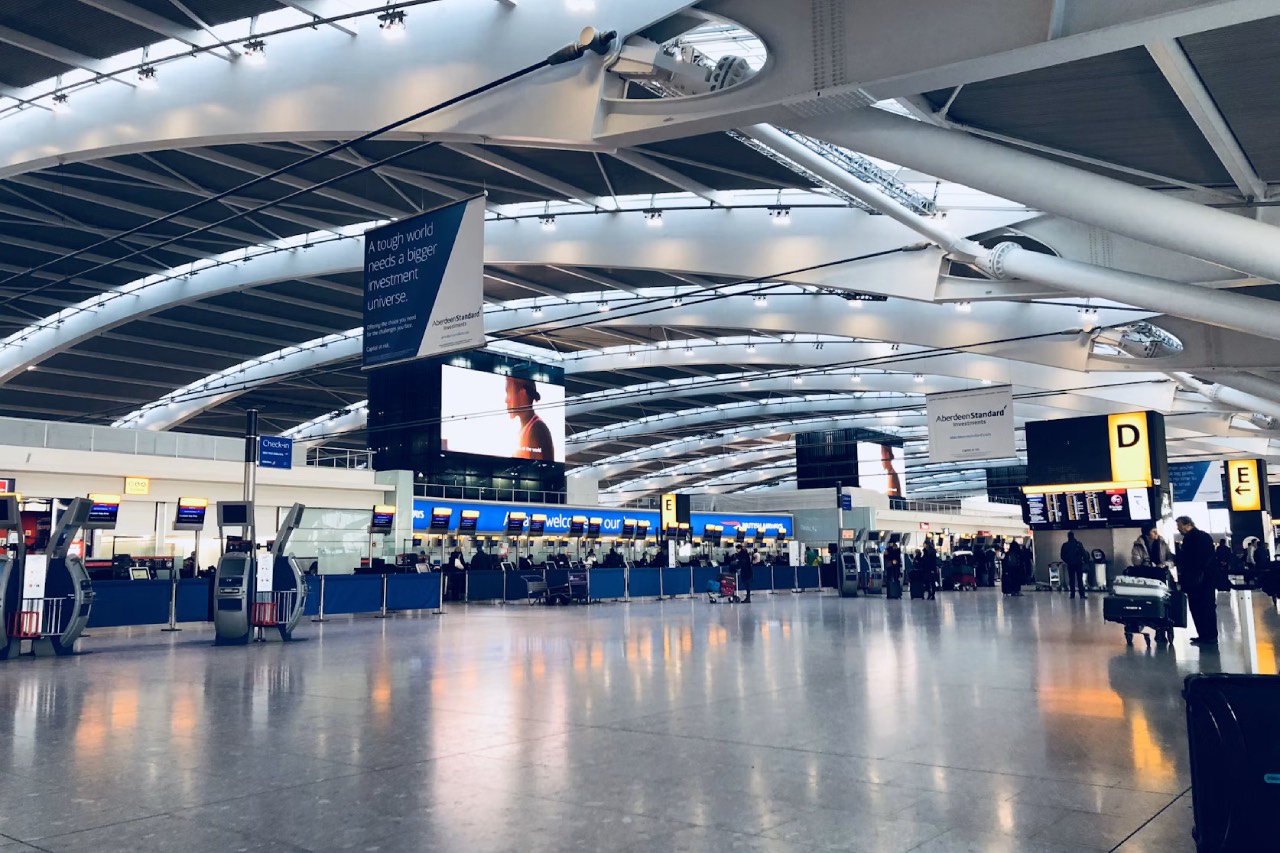
Potential placement environments include passenger arrival areas, departure areas, check-in zones, baggage collection areas and passenger circulation spaces.
Each environment offers a different communication opportunity.
Arrival areas
Arrival-focused placements can be relevant to hotels, tourism experiences, transport providers, restaurants and services that visitors may need after landing.
The campaign should account for passenger flow, baggage collection, customs procedures and the direction in which travelers move through the terminal.
Departure areas
Departure-focused placements may be suitable for premium brands, travel services, retail businesses and campaigns designed to reach departing travelers.
Depending on the exact placement, passengers may have different dwell times and levels of attention.
Check-in and circulation areas
These locations may offer opportunities to reach travelers before departure or while they move through the terminal. Actual visibility depends on the position of the advertising unit, surrounding activity and passenger circulation patterns.
Advertisers should request the precise media location and supporting evidence rather than relying on a general description of the airport.
B. Airport access roads and surrounding corridors
Outdoor advertising near the airport can provide visibility to people traveling between the airport and other parts of Bali.
Depending on the exact location, relevant corridors may include roads connecting the airport area with Tuban, Kuta, the Sunset Road area and other commercial or tourism districts.
These are distinct advertising environments. A billboard near an airport access road does not necessarily sit within airport property, and its audience will differ from that of a screen inside the terminal.
Roadside media may reach a combination of tourists, local residents, transport operators, hotel vehicles, commuters and business travelers.
When evaluating a billboard, consider:
These factors provide a more useful basis for evaluating a location than the phrase "near Bali Airport" alone.
C. Combining airport media with Bali outdoor advertising
Some campaigns benefit from combining terminal media with selected roadside billboards or digital outdoor screens.
For example, an international hospitality brand could use an airport placement to establish awareness and complementary outdoor media to reinforce its message around relevant commercial districts.
A multi-location campaign can also help brands reach different stages of the visitor journey.
However, the right combination depends on the campaign budget, target audience, duration and availability of suitable inventory. A single well-positioned placement may be more appropriate than a broad campaign with insufficient frequency or inconsistent creative execution.
Available advertising formats vary by location, media operator, technical specifications and booking period. The following are common format categories to investigate when requesting a Bali airport media proposal.
A. Digital LED screens
Digital out-of-home, or DOOH, uses electronic displays to present video, motion graphics or static creative content.
Potential advantages include:
Before booking, confirm the screen dimensions, resolution, aspect ratio, file format, maximum video duration, audio restrictions, loop duration and number of spots or plays included.
A digital screen's total operating time is not the same as the duration of an individual advertisement. Advertisers should request the actual schedule, spot length and frequency commitments.
B. Static airport displays
Static advertising uses printed graphics installed on approved display structures.
Depending on the location, static media can provide continuous visual presence throughout the contracted period. It may be appropriate for campaigns that prioritize a consistent brand image and do not require frequent creative changes.
Confirm whether printing, production, installation, maintenance and removal are included in the quotation.
C. Airport transit and operational-area advertising
Other formats may involve approved advertising on airport transport vehicles, passenger boarding stairs, apron-related equipment or other operational environments.
These opportunities are highly dependent on the airport's rules, the media operator's inventory and the permissions required for the specific placement.
Advertisers should not assume that every format is available to every brand or can be booked through the same supplier.
D. Roadside billboards near the airport
Large-format roadside billboards can complement terminal advertising by extending brand visibility beyond airport premises.
Their effectiveness depends on the actual site, viewing angle, traffic conditions, lighting, creative design and campaign duration.
Request current site photographs, exact dimensions, orientation, availability dates and any available traffic information before making a decision.
There is no single universal price for Bali airport advertising. Costs depend on the specific advertising unit, location, format, campaign dates and commercial terms offered by the relevant media owner or authorized supplier.
A quotation should be based on actual inventory rather than a general airport advertising estimate.
The main factors that influence pricing
1. Location and visibility
Advertising placements differ in terms of visibility, passenger movement, viewing distance and strategic importance. A prominent terminal display and a roadside billboard near the airport represent different media products and should be evaluated separately.
2. Advertising format
Digital screens, static displays, roadside billboards and transit-related formats have different production requirements and pricing structures.
3. Campaign duration
The cost of a campaign may depend on its length, selected dates and the media owner's minimum booking period. Some inventory may be offered in fixed packages rather than flexible daily bookings.
4. Digital advertising schedule
For digital media, confirm the number of plays, advertisement duration, rotation structure and any restrictions on scheduling.
A low headline price may not provide the same exposure as a package with a stronger share of voice or more frequent plays.
5. Production and installation
Static media may require printing, finishing, transport, installation and eventual removal. Digital media may require creative adaptation, file validation and technical approval.
Ask for an itemized quotation so you can compare the total campaign cost rather than the media rental price alone.
6. Taxes and commercial terms
Confirm applicable taxes, payment milestones, cancellation policies, creative deadlines and whether the quotation is net or includes any additional charges.
For international campaigns, also confirm the invoicing currency, payment method and any relevant bank charges.
What should be included in a quotation?
A useful media proposal should specify:
If a supplier quotes several placements together, request the price and specifications for each unit wherever possible.
This makes it easier to compare options and adjust the campaign without losing sight of the total budget.
Airport-related media can be relevant to several audience groups, but the audience depends on the precise placement.
A. International tourists
International visitors may be relevant to hospitality, tourism, retail, transportation, dining and lifestyle brands.
However, an airport placement does not automatically guarantee access to a particular nationality, income bracket or traveler profile. Audience composition should be supported by reliable passenger data or other relevant evidence.
B. Domestic travelers
Domestic passengers may be valuable for Indonesian consumer brands, hotel groups, retail businesses and services operating across multiple cities.
The relevance of domestic travelers depends on the media placement and the campaign's geographic and commercial objectives.
C. Business travelers and event attendees
Some campaigns target business travelers, conference participants or people attending international events.
Brands in hospitality, mobility, technology and professional services may consider these audiences, provided the placement and available data support the intended targeting strategy.
D. Local residents and transport operators
Roadside advertising around airport access routes can reach people who are not flying, including residents, commuters, drivers and transport service providers.
This is an important distinction when comparing roadside billboards with media located inside a terminal.
E. How to evaluate audience data
When reviewing audience claims, ask the media provider what the figures actually measure.
Useful information may include:
Passenger numbers are not equivalent to advertisement impressions. Similarly, a vehicle passing a billboard does not necessarily mean every occupant saw or remembered the advertisement.
Transparent measurement helps advertisers set realistic expectations and compare media options more accurately.
The best location is the one that fits your campaign objective, audience and budget, rather than necessarily the most expensive or visually impressive placement.
A. For hotels and resorts
Consider arrival-focused media and relevant access roads that connect travelers with your property's area.
A strong creative message should communicate the property's name, distinctive benefit and a simple next step.
B. For tourism attractions
Consider placements that reach visitors early in their journey, alongside complementary media around relevant tourist and commercial areas.
Where appropriate, use a clear booking URL or QR code. Do not assume that travelers will have enough time or opportunity to interact with a complex message.
C. For premium and luxury brands
Evaluate the visual quality, context and positioning of the media. The surrounding environment and creative execution should support the brand's intended image.
A premium placement is not automatically the best option if its audience or location does not align with the campaign objective.
D. For product launches and international campaigns
Consider whether the campaign needs broad awareness, repeated exposure or a more focused audience.
A coordinated mix of airport media, digital screens and roadside advertising may be useful, but the allocation should be justified by the media plan and available evidence.
E. For events and festivals
Consider campaign timing, booking lead times, event dates and the geographic relationship between the media location and the venue.
Ensure the advertisement is installed and visible during the relevant promotional window.
The booking process should begin with a clear campaign brief.
Step 1: Define your campaign objective
Decide whether the primary goal is brand awareness, destination promotion, product launch, event attendance, direct response or another measurable outcome.
This will help determine the most suitable format and location.
Step 2: Specify your dates and duration
Provide the desired campaign start and end dates, preferred duration and any flexibility.
Airport and roadside inventory can have different booking conditions. Availability should be checked for the exact period requested.
Step 3: Request a media proposal
Ask for relevant media options with photographs, specifications, pricing and booking terms.
If your campaign targets a specific audience, explain the objective so the media provider can recommend suitable placements.
Step 4: Review creative requirements
Confirm dimensions, aspect ratios, resolution, file types, safe zones, production requirements and submission deadlines.
Digital media may require technical checks and content approval. Static media generally requires sufficient time for production and installation.
Step 5: Confirm availability and commercial terms
Review the quotation, applicable taxes, payment terms, cancellation conditions and any restrictions on the creative content.
A preliminary indication of availability is not the same as a confirmed booking. Obtain written confirmation of the reservation and agreed campaign dates.
Step 6: Approve the artwork
Submit the final creative in the required format and obtain approval before production or scheduling.
Allow sufficient time for revisions, especially if the campaign involves multiple media owners or locations.
Step 7: Request installation proof and reporting
Where available, request photographs or other proof that the campaign has been installed or scheduled as agreed.
For digital media, ask what playback or delivery reports are available. For static placements, confirm how installation and campaign maintenance will be documented.
Reporting should reflect the type of media purchased and the evidence the provider can actually supply.
Lead times depend on the media format, inventory availability, creative approval process and production requirements.
Digital campaigns may require technical validation and approval, while static campaigns may require printing, finishing and installation.
For campaigns involving several placements, multiple suppliers or international approval teams, allow additional time for coordination.
When requesting a proposal, provide:
For planning purposes, Lestari Ads can advise on the lead time applicable to the requested inventory. Actual timelines should be confirmed for each campaign.
Booking outdoor advertising in Indonesia can involve practical considerations beyond the media rental fee.
A. Agency and media-owner relationships
Clarify whether your contact is the media owner, an authorized sales representative or an independent media agency.
If exclusivity is important, ask who controls the relevant inventory and whether exclusive representation or category exclusivity can be documented. Do not assume that an agency can guarantee exclusivity without the appropriate authorization.
B. Permissions and creative approval
Airport media and roadside advertising may be subject to different operational requirements, permissions and content restrictions.
Confirm the applicable approval process for the exact placement. Do not assume that approval for one location automatically covers another.
C. Currency, taxes and payment
Request a clear breakdown of the quotation, including the invoicing currency, applicable taxes and payment schedule.
International advertisers should also confirm the documentation needed for their procurement and accounting procedures.
D. Measurement and reporting
Establish in advance what proof of posting, playback reports, audience data or other campaign documentation will be provided.
Avoid relying on unsupported claims about guaranteed reach or impressions.
E. Weather and operational considerations
Outdoor campaigns can be affected by maintenance requirements, weather conditions, access restrictions and other operational factors.
Ask how the media provider handles damage, outages, maintenance or interruptions, and whether any replacement or make-good terms apply.
International brands may not have an established network of local media owners or the resources to coordinate every placement directly.
An experienced local OOH agency can help simplify the process by coordinating media research, quotations, location recommendations, artwork specifications, production, installation and campaign reporting.
The scope of support varies by agency and campaign. Advertisers should clarify which services are included and which are provided by the media owner or other suppliers.
For international campaigns, clear communication is especially important. A useful agency partner should explain the available options, identify practical constraints, provide transparent pricing and help coordinate the campaign from planning through execution.
Q: How much does airport advertising in Bali cost?
A: Pricing depends on the location, advertising format, dimensions, campaign duration, display schedule and production requirements. Contact us for a quotation tailored to your preferred locations, campaign dates and budget.
Q: Can international brands advertise at Bali Airport?
A: Yes, we can help international brands explore airport advertising opportunities in Bali, subject to availability, booking conditions and applicable creative approval requirements.
Q: What is the difference between airport advertising and airport-area billboards?
A: Airport advertising refers to placements within the airport environment, while airport-area billboards are located along surrounding roads and access corridors. Each option offers different audience opportunities, formats and booking conditions. We can help you explore suitable options based on your campaign objectives.
Q: Is digital or static airport advertising better?
A: Neither format is universally better. Digital advertising offers creative flexibility and scheduled rotations, while static advertising provides a consistent visual presence. We can help you compare suitable options based on your campaign objectives, budget and desired audience.
Q: Can I book airport advertising for one month?
A: Minimum booking durations vary by advertising format and location. Contact us to confirm the minimum booking period, available dates and pricing for your campaign.
Q: How do I know whether an advertising location is available?
A: Availability depends on the specific location and campaign dates. Contact us to check current availability and receive confirmation of your requested booking before proceeding.
Q: Can airport advertising guarantee a certain number of impressions?
A: Not automatically. Reach and impression estimates depend on the available audience data, measurement methodology and placement characteristics. We can help you review the available data and understand its limitations. Passenger volume alone does not guarantee that every passenger will see an advertisement.
Q: What materials should I prepare before requesting a quotation?
A: Prepare your preferred campaign dates, advertising format, target audience, campaign objectives, budget range, artwork status and any specific location requirements. Providing a clear brief helps us recommend relevant options and prepare a more accurate quotation.


by Milanello
Saturday, 10 Jun 2023

Sunday, 20 Oct 2024
Wednesday, 5 Aug 2026
Saturday, 26 Oct 2024

Friday, 25 Apr 2025

Lestari Ads Agency - PT Lestari Dev Solusindo
Lestari Ads is a leading out-of-home media company with the largest network in Indonesia. We believe the world is a canvas. Every advertisement is an opportunity to inspire, engage, and transform public spaces. We continuously push boundaries in Out-Of-Home (OOH) advertising, changing the way brands interact with audiences beyond the digital screen, bringing stories to life where people live, move, and connect.
The most trusted OOH advertising agency in Indonesia
Experience the top of visibility with Indonesia's leading out-of-home (OOH) advertising agency. We specialize in turning the urban landscape into a dynamic canvas for your brand, crafting compelling narratives that capture the imagination of millions. Our mastery over strategic placements and innovative formats ensures your message not only reaches, but resonates with a diverse and expansive audience. With a proven track record of delivering high-impact campaigns across Indonesia's bustling cities and beyond, we redefine what's possible in OOH advertising.
Find the best quality billboard advertising space with variety of size and dimension
out-of-home advertising, digital billboards, traditional billboards, transit advertising, street furniture advertising, outdoor signage, digital ooh, led billboards, static billboards, large format advertising, advertising displays, ooh media, advertising billboards, outdoor digital screens, urban advertising, roadside billboards, digital signage, retail advertising, poster advertising, mobile billboard advertising, digital transit ads, interactive ooh, airport advertising, mall advertising, cinema advertising, sports venue advertising, digital outdoor advertising, public transportation ads, taxi advertising, bus shelter ads, pedestrian advertising, advertising kiosks, outdoor media solutions, billboard marketing, ooh advertising strategies, ooh media planning, digital billboard solutions, smart billboard advertising, contextual ooh ads, geotargeted ooh ads, location-based ooh, smart outdoor ads, programmatic ooh, data-driven ooh, brand awareness billboards, large-scale ooh campaigns, outdoor advertising effectiveness, billboard design, high-traffic billboard locations, hyperlocal ooh, street-level ooh, public transit advertising, ooh campaign management, outdoor digital displays, media buyers ooh, roadside digital ads, metro station advertising, shopping center ads, ooh advertising trends, outdoor media buying, bus wrap advertising, illuminated billboards, building wrap advertising, branded outdoor advertising, billboard networks, freeway advertising, expressway billboards, train station advertising, out-of-home advertising campaigns, event-based ooh ads, ooh media buying strategies, proximity-based ooh, national ooh campaigns, city-wide ooh advertising, large-scale outdoor campaigns, integrated ooh solutions, ooh digital networks, smart city advertising, mobile billboard solutions, dynamic outdoor ads, highway billboard advertising, ooh media optimization, digital out-of-home screens, high-impact ooh ads, retail digital signage, interactive billboard advertising, regional ooh advertising, local outdoor advertising, consumer engagement ooh, brand visibility outdoor ads, targeted billboard advertising, digital advertising screens, urban billboard advertising, weather-triggered ooh ads, motion sensor billboards, flexible ooh solutions, sustainable outdoor advertising, renewable energy billboards, solar-powered billboards, ooh for small businesses, outdoor brand activations.
Frequently Ask Questions
About Us