
Bridging Online and Offline: How OOH Drives Digital Engagement in Indonesia
Friday, 14 Nov 2025

PT Lestari Dev Solusindo
Aldeoz Building Lt. 6, Jl. Wr. Jati Barat No.39, RT.2/RW.4, Kalibata, Pancoran, Jakarta Selatan, DKI Jakarta, 12740.
+6281389455717 - contact@lestariads.com
www.lestariads.com

Indonesia is one of Southeast Asia's most important automotive markets, making it an attractive destination for global automotive brands looking to build awareness, launch new models, and strengthen their presence across major cities.
For automotive brands, Out-of-Home advertising is about more than simply placing a vehicle on a billboard.
A well-planned OOH campaign can support brand building, vehicle launches, product consideration, dealer awareness, promotional campaigns, and even the wider customer journey from awareness to test drive.
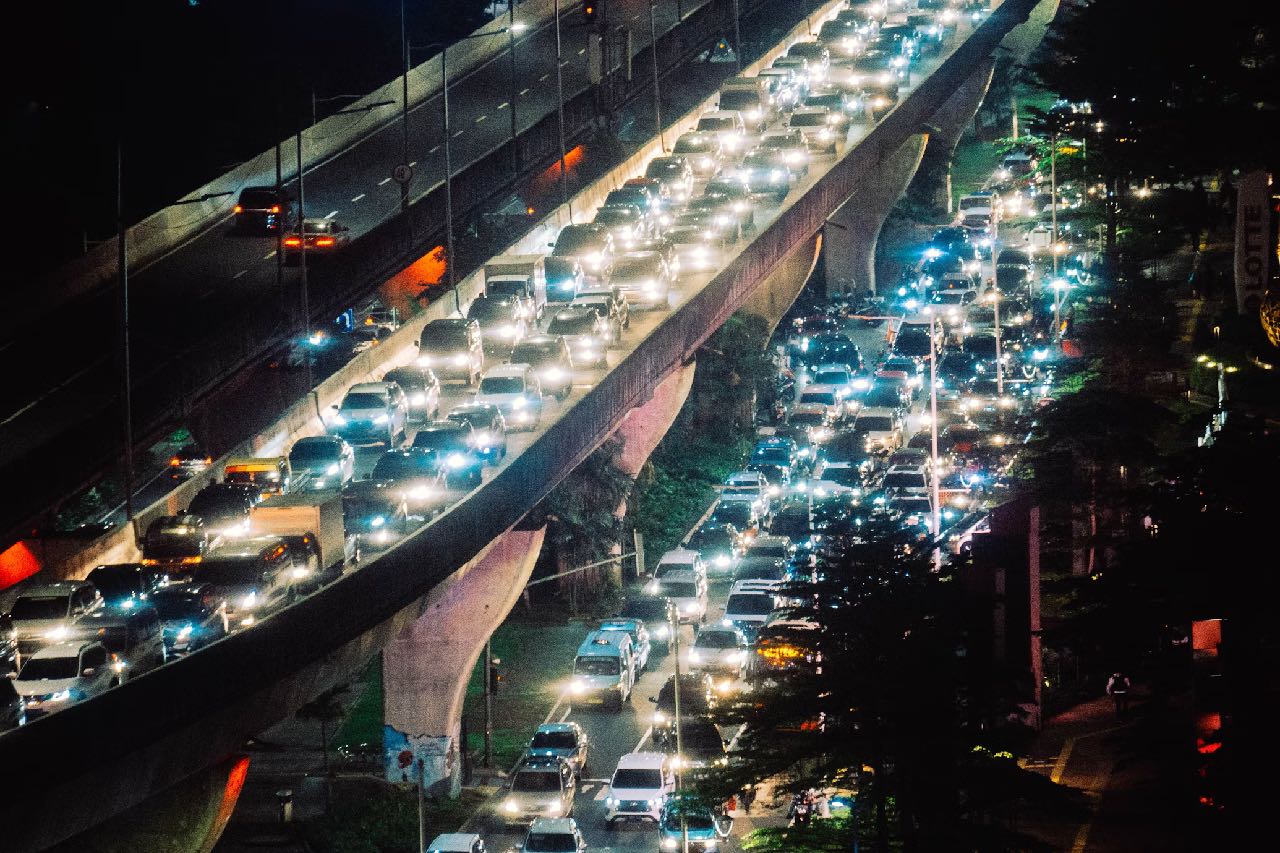
Jakarta is particularly important because of its concentration of business districts, commercial areas, major roads, public transportation networks, and high levels of daily mobility.
But the opportunity extends beyond Jakarta. Depending on the brand's target audience and distribution strategy, cities such as Surabaya, Bandung, Medan, Semarang, Makassar, and Denpasar can also play an important role.
This guide explores how automotive brands can use OOH advertising in Indonesia, including media formats, location strategy, creative development, vehicle launches, EV campaigns, and measurement.
Buying a vehicle is rarely an instant decision.
Consumers often move through several stages before purchasing a car:
Awareness → Interest → Consideration → Research → Test Drive → Purchase
This makes repeated brand exposure particularly valuable.
OOH can put a vehicle in front of consumers during their everyday journeys, creating repeated opportunities to see the same brand or model.
For automotive advertisers, OOH can help build:
The visual nature of automotive products also makes them particularly well suited to OOH.
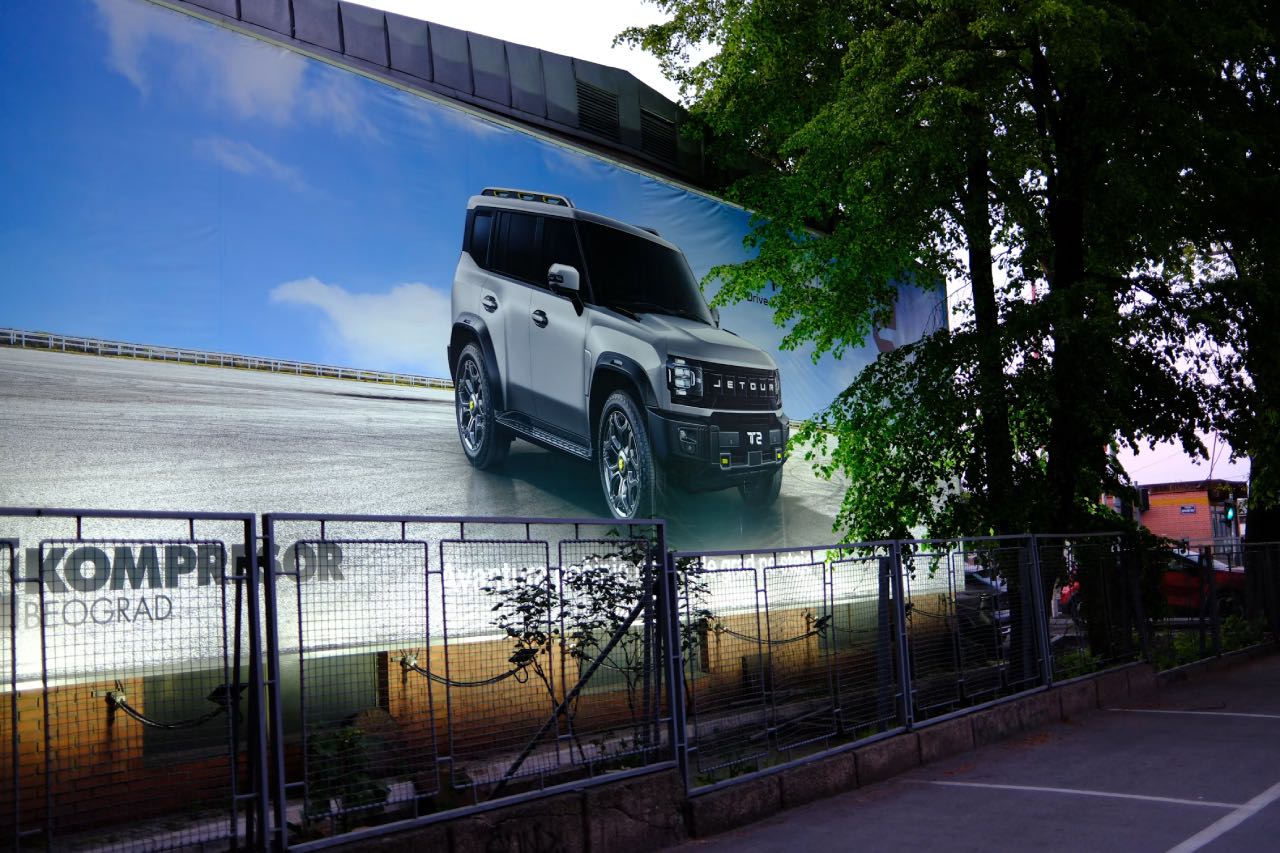
A large-format image of a vehicle can communicate design, positioning, and brand identity immediately, without requiring consumers to read a long message.
Indonesia requires a localized approach to OOH planning.
Jakarta is the country's major business and economic center, but automotive brands should not automatically assume that Jakarta alone is enough.
A national automotive brand may need a broader city strategy, while a premium brand may prioritize a smaller number of high-value locations.
The right approach starts with three questions:
These questions help determine the right locations, formats, campaign duration, and media mix.
1. Billboard Advertising
Billboards remain one of the most recognizable OOH formats for automotive campaigns.
Their large physical footprint allows brands to showcase a vehicle prominently while communicating a simple campaign message.
Automotive brands can use billboards for:
However, size alone does not determine effectiveness.
A huge billboard in a poorly matched location may generate less value than a smaller, highly visible placement located directly within the target audience's daily journey.
2. Digital Out-of-Home
Digital Out-of-Home, or DOOH, provides additional flexibility for automotive advertisers.
Instead of running one static creative throughout a campaign, brands can rotate multiple messages and visual executions.
This creates opportunities for:
For example, an automotive brand could feature an urban SUV during morning and evening commuting periods, then use a different creative execution during the afternoon or evening.
DOOH can also reinforce a technology-forward brand image, making it particularly relevant for EVs, premium vehicles, and brands positioning themselves around innovation.
3. Transit Advertising
Public transportation offers another way for automotive brands to reach urban audiences.
In Jakarta, opportunities can include TransJakarta, MRT Jakarta, KRL, and other transportation environments.
Transit advertising allows brands to reach consumers when they are traveling as passengers rather than drivers.
This can be particularly useful for reaching:
Combining roadside OOH with transit advertising can also increase campaign coverage across different moments of the consumer journey.
4. Mall and Place-Based Advertising
Automotive brands can also reach consumers in environments where they spend time rather than simply pass through.
Shopping malls, lifestyle centers, office buildings, and commercial destinations can provide a different context from roadside advertising.
These environments can be especially relevant for:
For premium automotive brands, the environment itself can contribute to brand positioning.
A premium vehicle displayed in an environment that matches its target audience can reinforce perceptions of quality and exclusivity.
5. Experiential OOH
Automotive brands have an additional advantage: the product itself can become part of the advertising experience.
Experiential OOH can include:
This turns OOH from a passive awareness channel into a physical brand interaction.
The approach is particularly relevant for EVs and vehicles with new technologies that consumers may want to experience firsthand.
Location planning should go beyond traffic volume.
Traffic is important, but automotive advertisers should also consider audience profile, journey context, visibility, dwell time, and repetition.
1. Business Districts
Business districts such as Sudirman and Thamrin can be relevant for brands targeting professionals, executives, and consumers with higher purchasing power.
These areas can work well for:
2. High-Traffic Roads
High-volume roads can provide significant exposure.
However, advertisers should evaluate how clearly the media can be seen, how long consumers are exposed to the message, and whether the creative can be understood quickly.
High traffic does not automatically mean high advertising value.
3. Residential and Emerging Areas
For mass-market vehicles, residential areas and growing urban districts can be important.
These locations can bring the brand closer to where potential customers live and spend their daily lives.
4. Shopping and Lifestyle Areas
Commercial destinations provide another valuable environment.
Consumers visiting malls and lifestyle destinations may be in a more receptive mindset for shopping, research, and product consideration.
Automotive advertising often faces one major creative challenge: too much information.
A billboard is not a brochure.
The creative should identify the single most important message and build the execution around it.
A simple structure could be:
Hero Visual + Model Name + One Key Message + Brand + CTA
For example:
THE NEW X5
Luxury Meets Electric Performance
BMW
Book a Test Drive
The faster the audience understands the message, the stronger the potential impact.
1. Choosing Media Based Only on Price
The cheapest media placement is not necessarily the most cost-effective.
Advertisers should compare audience relevance, visibility, location quality, exposure, and campaign objectives.
2. Putting Too Much Information on the Creative
Price, features, specifications, promotions, dealer information, website URLs, social handles, and QR codes can quickly overwhelm a billboard.
3. Ignoring Location Context
A strong creative can still underperform when placed in an environment that does not match the target audience.
4. Ignoring Frequency
One large exposure is not always more effective than repeated exposure across a relevant journey.
.5 Treating OOH and Digital as Separate Channels
When OOH has no connection to the brand's digital ecosystem, part of the potential customer journey can be lost.
For international automotive brands unfamiliar with the Indonesian market, the process should begin with the business objective and target audience.
The media strategy can then map:
Not every automotive campaign needs nationwide billboard coverage.
A premium vehicle launch may benefit more from a combination of premium billboards, DOOH, mall media, and transit advertising in selected cities.
A mass-market vehicle may require broader geographic coverage and higher-frequency media across several markets.
OOH advertising can be a powerful channel for automotive brands in Indonesia when media strategy is built around audience, location, creative, and campaign objectives.
The goal is not simply to buy the location with the highest traffic.
The goal is to reach the right audience, in the right place, with the right message, at the right time.
By combining billboards, digital OOH, transit advertising, place-based media, and experiential activations, automotive brands can build a strong physical presence in Indonesia while connecting OOH with their broader digital customer journey.
For global brands entering or expanding in Indonesia, working with a local OOH partner can also simplify media planning, location selection, production, campaign execution, and coordination across different cities.
Lestari Ads helps brands plan and execute OOH campaigns across Indonesia, from billboards and digital OOH to transit advertising and custom campaigns.
Whether the objective is a new vehicle launch, brand awareness campaign, EV education, or market expansion, an OOH strategy can be designed around the target audience, priority locations, and campaign objectives.


by Milanello
Friday, 14 Nov 2025

Tuesday, 2 Jul 2024

Monday, 10 Jun 2024

Thursday, 1 Jun 2023

Saturday, 29 Jun 2024

Lestari Ads Agency - PT Lestari Dev Solusindo
Lestari Ads is a leading out-of-home media company with the largest network in Indonesia. We believe the world is a canvas. Every advertisement is an opportunity to inspire, engage, and transform public spaces. We continuously push boundaries in Out-Of-Home (OOH) advertising, changing the way brands interact with audiences beyond the digital screen, bringing stories to life where people live, move, and connect.
The most trusted OOH advertising agency in Indonesia
Experience the top of visibility with Indonesia's leading out-of-home (OOH) advertising agency. We specialize in turning the urban landscape into a dynamic canvas for your brand, crafting compelling narratives that capture the imagination of millions. Our mastery over strategic placements and innovative formats ensures your message not only reaches, but resonates with a diverse and expansive audience. With a proven track record of delivering high-impact campaigns across Indonesia's bustling cities and beyond, we redefine what's possible in OOH advertising.
Find the best quality billboard advertising space with variety of size and dimension
out-of-home advertising, digital billboards, traditional billboards, transit advertising, street furniture advertising, outdoor signage, digital ooh, led billboards, static billboards, large format advertising, advertising displays, ooh media, advertising billboards, outdoor digital screens, urban advertising, roadside billboards, digital signage, retail advertising, poster advertising, mobile billboard advertising, digital transit ads, interactive ooh, airport advertising, mall advertising, cinema advertising, sports venue advertising, digital outdoor advertising, public transportation ads, taxi advertising, bus shelter ads, pedestrian advertising, advertising kiosks, outdoor media solutions, billboard marketing, ooh advertising strategies, ooh media planning, digital billboard solutions, smart billboard advertising, contextual ooh ads, geotargeted ooh ads, location-based ooh, smart outdoor ads, programmatic ooh, data-driven ooh, brand awareness billboards, large-scale ooh campaigns, outdoor advertising effectiveness, billboard design, high-traffic billboard locations, hyperlocal ooh, street-level ooh, public transit advertising, ooh campaign management, outdoor digital displays, media buyers ooh, roadside digital ads, metro station advertising, shopping center ads, ooh advertising trends, outdoor media buying, bus wrap advertising, illuminated billboards, building wrap advertising, branded outdoor advertising, billboard networks, freeway advertising, expressway billboards, train station advertising, out-of-home advertising campaigns, event-based ooh ads, ooh media buying strategies, proximity-based ooh, national ooh campaigns, city-wide ooh advertising, large-scale outdoor campaigns, integrated ooh solutions, ooh digital networks, smart city advertising, mobile billboard solutions, dynamic outdoor ads, highway billboard advertising, ooh media optimization, digital out-of-home screens, high-impact ooh ads, retail digital signage, interactive billboard advertising, regional ooh advertising, local outdoor advertising, consumer engagement ooh, brand visibility outdoor ads, targeted billboard advertising, digital advertising screens, urban billboard advertising, weather-triggered ooh ads, motion sensor billboards, flexible ooh solutions, sustainable outdoor advertising, renewable energy billboards, solar-powered billboards, ooh for small businesses, outdoor brand activations.
Frequently Ask Questions
About Us