



Saturday, 31 Jan 2026 —
135 views —
by superadmin
When people think about Out-of-Home advertising, they usually imagine billboards, digital screens, or large roadside placements. However, one of the most effective and overlooked formats sits much closer to the audience: inside vehicles.
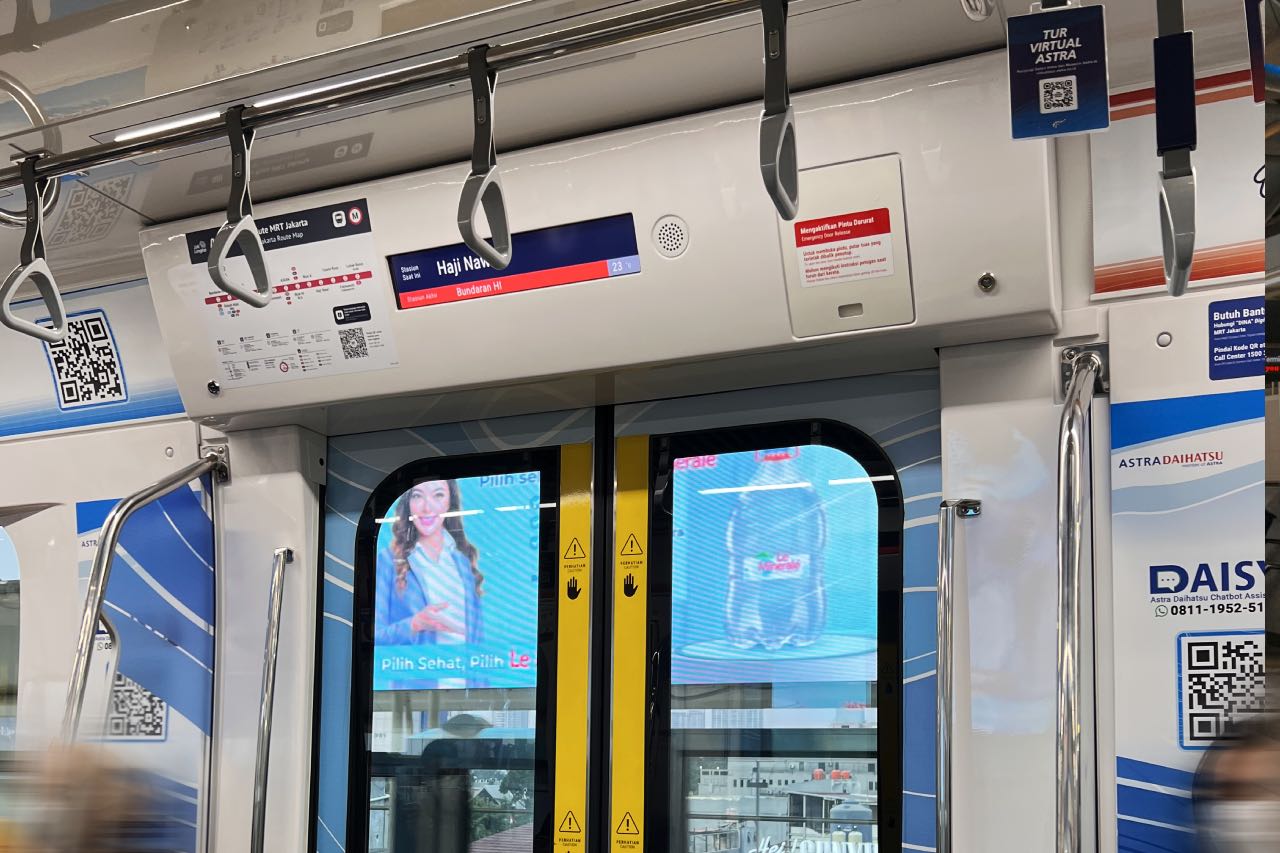
Inside vehicle branding refers to advertising placed within public and shared transportation, such as buses, trains, angkot, ride-hailing cars, and shuttles. While often considered secondary to exterior formats, this medium delivers unique advantages that are especially powerful in high-mobility markets.
Why Inside Vehicle Branding Is Often Overlooked
Inside vehicle branding does not offer the instant visual dominance of large outdoor media. It is subtle, personal, and less visible from a distance. As a result, it is frequently underestimated in media planning discussions.
Common reasons include:
- Lower perceived scale compared to billboards
- Less dramatic visuals
- Limited awareness among global media buyers
Despite this, inside vehicle branding consistently delivers high attention and message retention.
Captive Attention in a Distracted World
One of the strongest advantages of inside vehicle branding is captive attention.
Passengers inside vehicles are not actively moving. They are seated, standing, or waiting. Screen usage may be limited by signal quality, battery life, or motion discomfort. This creates a rare window where physical media can command attention without competition.
Inside vehicles, advertising benefits from:
- Longer dwell time
- Close viewing distance
- Minimal visual clutter
- Repeated exposure during daily routines
These conditions are difficult to replicate in most digital environments.
High Frequency Through Routine Mobility
Inside vehicle branding is naturally embedded in daily life.
Commuters often use the same routes and vehicles repeatedly. This creates organic frequency without increasing media spend. Unlike digital ads that rely on repeated impressions, inside vehicle branding builds familiarity through habit.
This format is especially effective for:
- Urban commuters
- Students
- Service workers
- Daily intercity travelers
Frequency is earned through routine, not interruption.
Relevance in Emerging and High Density Markets
Inside vehicle branding performs particularly well in emerging markets where public and shared transportation plays a central role.
In countries like Indonesia, transportation modes are diverse and widely used. Vehicles become moving environments where people spend significant time each day.
In these contexts, inside vehicle branding benefits from:
- High daily passenger volume
- Long travel duration
- Strong route consistency
- Deep integration into everyday life
This makes it a strategic format, not a tactical add-on.
Trust and Perceived Credibility
Advertising inside vehicles often carries an implied sense of legitimacy.
Passengers associate the presence of ads inside transportation with regulation, permission, and credibility. Brands that appear in these spaces are often perceived as established and trustworthy.
This perception is particularly valuable for:
- Financial services
- Telecommunications
- Healthcare
- Digital platforms entering new markets
Physical proximity enhances perceived authenticity.
Creative Simplicity and Message Clarity
Inside vehicle branding rewards clarity.
Because passengers view ads at close range, messages do not need to compete for attention. Effective creative focuses on:
- Clear headlines
- Simple visuals
- Strong brand identifiers
- Minimal copy
This environment encourages message comprehension rather than quick scanning.
Measuring Impact Beyond Clicks
While inside vehicle branding does not generate clicks, it influences awareness, recall, and consideration.
Measurement approaches typically include:
- Brand recall surveys
- Route-based exposure analysis
- Store visit uplift near routes
- QR code engagement for hybrid campaigns
The impact is cumulative and long-term.
Lessons for Brands and Planners
Inside vehicle branding should not be treated as filler inventory.
Key lessons include:
- Plan it as a frequency driver
- Align placements with commuter routes
- Use simple and consistent creative
- Combine with exterior OOH for full funnel impact
When planned intentionally, this format delivers disproportionate value.
Conclusion
Inside vehicle branding remains one of the most underrated formats in Out-of-Home advertising. Its strength lies in attention quality, frequency through routine, and deep integration into daily life.
In a world saturated with screens, being present where people pause, sit, and wait offers a rare and powerful communication opportunity.